
The Ferrari Problem
Why Some Climbing Gyms Aren't Getting Results from AI - and What to Do About It
A response to Pete Ward at Rise Above Consultancy.
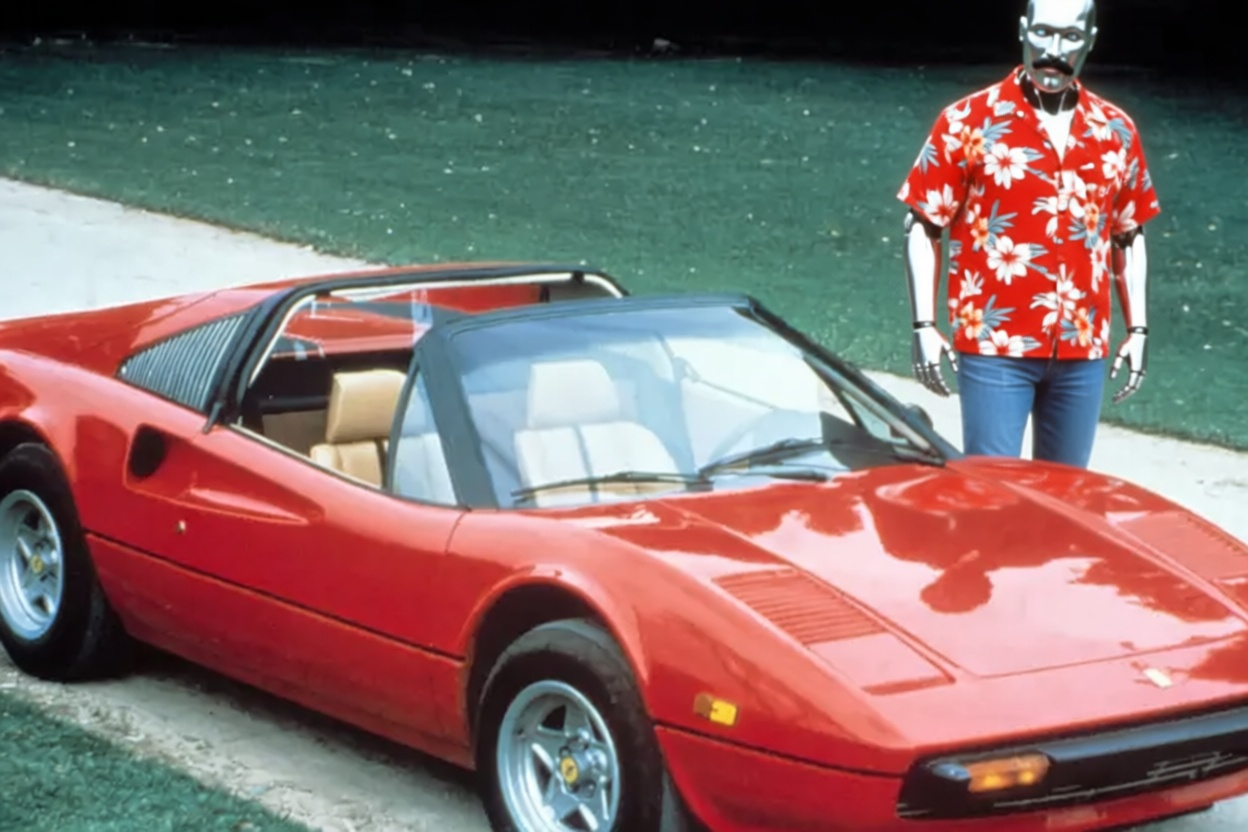
When I was 20, a friend's father bought a Ferrari. A real one — somewhere north of 700 horsepower, the kind of machine that doesn't exist in my normal life. One afternoon he handed me the keys and asked if I'd like to give it a try. Visions of Magnum P.I. raced through my mind, I couldn't wait to burn some rubber and rip up the streets.
I could barely get it out of the parking lot.
Not because the car was broken or because I couldn't drive — I'd already been driving way too fast for years. The car was working perfectly. It was capable of things I literally could not access; an advanced instrument I didn't know how to play. The handling rewarded inputs I didn't know to give. The throttle and brakes were sharper than I could anticipate. I could move it. I couldn't operate it.
My friend Ben’s father was getting different results from the same car; he could really DRIVE it - Thomas Magnum style. When he bought it, the dealer sent him to a training program at a racetrack in Italy — days with instructors showing him how the car worked and what it expected from a driver. He came back a trained operator of a high-performance machine.
That story has been on my mind today after reading Pete Ward's "Your Climbing Gym's Lacking Sales Results Are An AI Red Flag." Pete's observation is sharp: many AI-forward climbing gyms are underperforming, and the tools are amplifying ignorance rather than concealing it. He's diagnosing a real symptom. He's not diagnosing the actual cause.
The actual cause isn't that AI is hurting these businesses. It's that almost no one in the climbing industry has been trained to operate it.
What Pete gets right
Pete's central observation deserves to be said out loud: most climbing gyms using AI right now are getting underwhelming results. Sales copy that doesn't convert. Marketing material that sounds like every other gym. Thinking outsourced to a tool that, in their hands, mostly produces averages.
He's also right that this is a leading indicator. Sales is where the rot shows up first, but it isn't where it lives. The rot lives upstream — in process, in capability, in the assumption that a powerful tool deployed by an untrained operator will produce powerful results. Customers can tell the difference between content written by someone who has run a gym and content generated by someone who has never set foot in one. Pete is naming a real problem.
Where I push back: he frames the problem as AI itself, and the solution as protecting your organization from AI. Hire experienced people. Monitor for over-reliance. Recognize human expertise as a premium.
All defensible. None of it addresses the actual leverage.
What the diagnosis is missing
The Ferrari isn't the problem. The driver isn't either, exactly — the driver is untrained, which is a fixable condition.
Almost no gym owner, GM, marketing manager, or sales associate I've talked to in the last 18 months has received structured training on deploying AI in their operational context. Some YouTube videos, some LinkedIn posts, a vendor pitch, maybe a CWA panel. Then they go back to their gym, open a chat box, and ask the tool to do their job. Exactly what I did with the Ferrari: press the pedals and see what happens.
The result is what Pete is describing — generic outputs, hollow strategy, marketing copy that sounds like every other small business in America. Not because the tool is bad. Because the operator has no framework for what they're asking it to do, no sense of when the output is useful and when it's filler. They're driving the Ferrari around the parking lot at 15 mph and concluding the car is overrated.
The car is not overrated. It's one of the most capable machines ever produced – but you must know how to operate it.
What "trained, planned, intentional" AI use actually looks like in a climbing gym
Untrained AI use looks like this: a gym GM opens ChatGPT, types "write a member retention email," copies the output, hits send.
Trained AI use looks like this — and it's what we're building in active engagements with gyms right now:
The system has context. Your member personas, retention history, seasonality, routesetting cycle, competitive landscape, brand voice, churn by cohort and tenure. None of this is in a default chat session. All of it must be deliberately built, mapped, and maintained.
The system has explicit job specifications. Not "write me an email" but "draft a retention email targeting members in months 4-7 of their first year who have visited fewer than twice in the past three weeks, based on the win-back framework we used in Q3, in the voice we've established for off-peak comms."
The system has feedback loops. Structured review before publication. Results measured. Learnings fed back into the prompt library or agent instructions.
The system has guardrails on what it does NOT do. Some decisions stay with humans. Some communications never get automated. Some functions get AI assistance but never AI authorship. Intentional, documented, consistent.
The team has been trained on the system. Not "here's how to use ChatGPT" but "here's how this tool integrates with your specific role, what it's responsible for, what you're responsible for, and how the two pieces fit together."
That's the factory training program. Without it, the tool is a parking-lot Ferrari. With it, you're accessing capability — margins, response times, consistency — that an unaided team cannot produce.
The gap between those two states is not "AI vs. no AI." It's trained vs. untrained.
AI as a thinking partner, not a task replacement
One of Pete's concerns is that AI is replacing critical thinking — that operators are outsourcing the reasoning that used to make them good at their jobs, and losing capability in real time. He's right that this happens. And it's the single biggest self-inflicted wound in untrained AI use.
The fix isn't to back away. It's to draw a clean line between the two legitimate uses of AI in a gym:
Rote replacement — only where systems are well-developed and SOP is strongly defined. Schedule generation, FAQ responses, recurring report formatting, structured comms. The operator already knows the right answer; AI just executes it faster.
Thinking partner — deep context loaded, subject-matter expert in the loop, every output reviewed and continually revised. AI doesn't replace your judgment; it pressure-tests it, surfaces angles you didn't consider, drafts the version you then sharpen. The expert gets sharper from the exchange, not duller.
When a gym uses AI for thinking instead of thinking for themselves, Pete's concern lands exactly. When a gym uses AI alongside thinking — with a subject-matter expert holding the reins — the operator's capability compounds rather than atrophies.
There's a second piece. AI is still in its childhood phase. The shortcomings that make today's untrained use look bad are the shortcomings that will be least visible 18 months from now. The operators who learn how to integrate AI into their thinking and operational processes now — while it's still awkward, while the prompts are clunky, while the systems take effort to build — will compound advantages their peers will not catch up on. The Japanese have a word for this posture: Kaizen. Continuous, deliberate, small-step improvement. Applied to a technology advancing this quickly, it isn't a nice-to-have. It's the only posture that keeps you in the conversation.
The strategic cost of conflating these
If gym operators read Pete's article and walk away with "AI is hurting us, so we should pull back," what they'll actually do is pull back from training and tooling investment. They'll keep using AI — humans use the tools they have — but informally, individually, without the systems that make it work. They'll keep producing the exact outputs Pete is critiquing. They'll just feel worse about it.
Meanwhile, a handful of operators will figure out the trained, intentional, integrated approach. The AI industry calls this gap the capability overhang — the distance between what frontier tools can do and what most organizations have built around them. It isn't closing because AI is getting easier. It's closing because some organizations are doing the work of operationalizing it and others aren't. Untrained operators aren't capturing value; that's true. The conclusion that the value isn't there is the part I don't follow.
What gym owners should do
If you're a gym operator wondering whether AI is worth the investment:
Stop letting AI be a chat box your team opens and copies from. That's the parking-lot phase. It generates the symptoms Pete is describing.
Pick two or three outcomes you want AI to materially affect. Member retention. Sales conversion. Routesetting safety documentation. Coaching schedules. Not all of them.
Build the underlying systems before you build the prompts. Member data, brand voice, operational context, decision rights. Without them, AI is shouting into a vacuum that knows very little about climbers and climbing industry.
Train the people who will operate the tools. Role-specific, hands-on, connected to their day-to-day work. Not corporate eLearning.
Measure the outcomes you said you cared about. Adjust based on what works. Compound from there.
This is the trained-operator approach. The difference between fronting in a Ferrari and flexing the Ferrari. Only one is getting the results the car is capable of.
Pete and I are looking at the same problem and agree something needs to change. Where we differ is the recommendation. Pete is pointing at AI and saying the tool is the issue. I'm pointing at AI and saying the missing operating capability is the issue. The category-defining gyms of the next five years will treat AI as operational infrastructure with a learning curve — and the ones that invest in training their teams will compound advantages the ones that don't will never close.
The Ferrari isn't going back to the dealership. The question is whether you fly to Italy.
— Ty Foose, FOOSE.AI
ty@foose.ai
